
No Pecans Were Harmed…
May 17, 2011
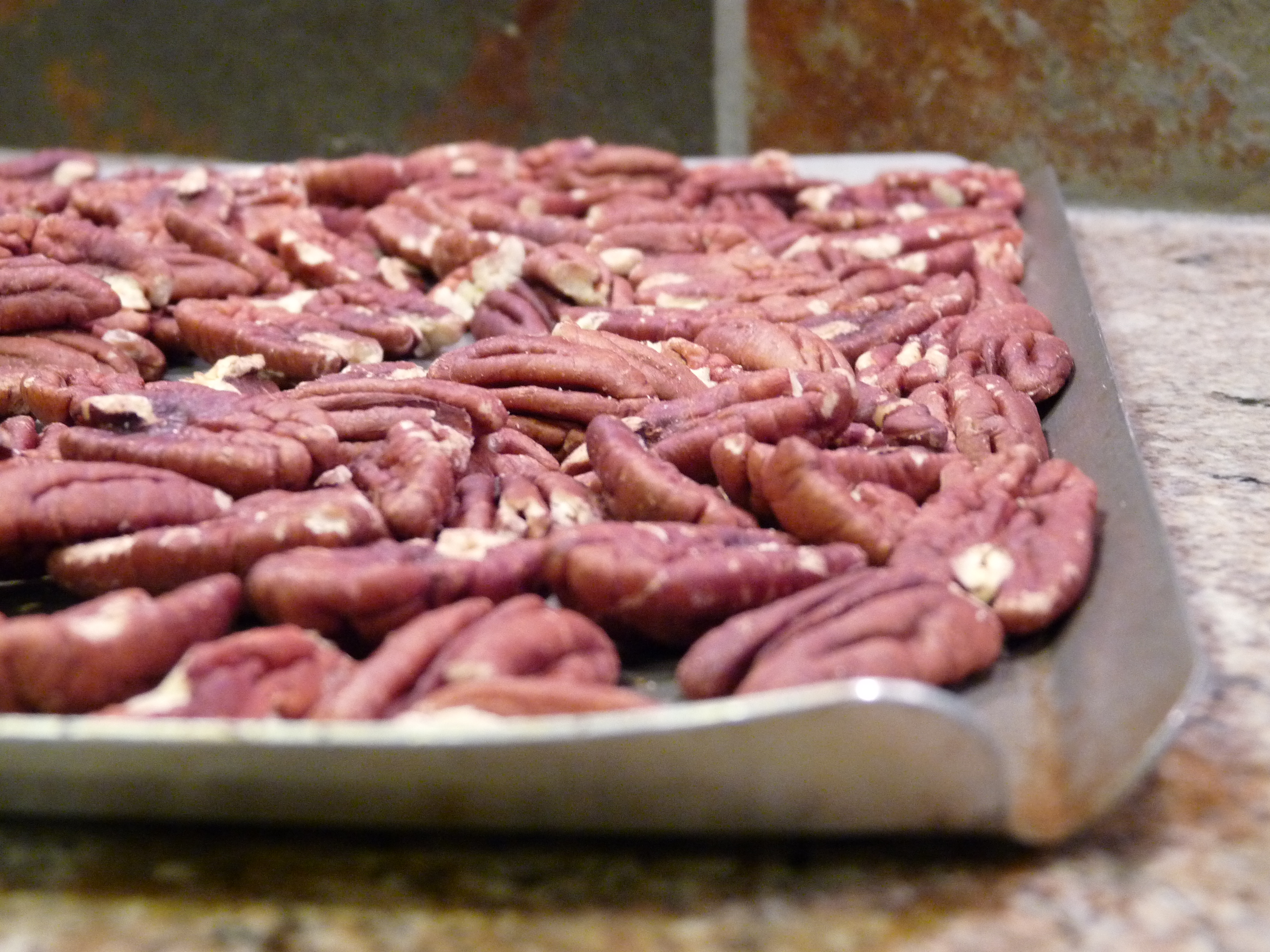
….in the shooting of this picture.
A roasting pecan is absolutely one of the world’s most heavenly smells. And I was all set to say a thing or two about that, but I got distracted by that glaring, passively constructed opening sentence.
I’m told that the passive voice is a lazy and cheap devise used by weak writers who rely on trite statements to bail them out, instead of using clear, conventionally constructed sentences and effective transitions.
Ouch.
So, I decided, instead, to do a little grammar research.
I mean, this is primarily a writing blog (as it says over there in the right margin). My objective is to become a sharper writer…so, I am going to have to pay a little bit more attention to these things.
This is what I found out (gleaned from various geeky grammar sites):
- In an active sentence, the subject is doing the action: “I heard it through the grapevine.” In a passive sentence, the target of the action moves into the subject position: “It was heard by me through the grapevine.”
- Passive construction isn’t incorrect as much as it is wordy, vague, and/or awkward. It’s simply not the best way to phrase a thought. If you want tight, clear writing, it’s best to use the active voice.
- The passive voice does have its place. For example, it can be used intentionally to obscure meaning. Reagan famously said, “Mistakes were made,” when addressing questions about the Iran-Contra scandal. He did not want his administration to be implicated, so purposely left out the obvious subject of the sentence (who made the mistake?).
The passive voice can also be useful if the object is more important than the subject, like in my introductory sentence. The active form of that sentence might read: “I did not harm any pecans when I shot this picture,” which is more straightforward but does not focus the reader’s attention on the fate of the pecans and is not the play on words I was going for (the No animals were harmed in the making of this film trope, which is a passive statement meant to appropriately focus the reader on the object rather than the subject).
So… is that all clear?
One other thing I found interesting, especially for fans of Elements of Style:
In their section on the passive voice, Strunk and White apparently mis-identify as passive 3 out of 4 of their examples. Most grammarians agree that the first example is expressed in passive voice, but at least some grammarians believe that the last three are, in fact, expressed correctly in the active voice:
- “At dawn the crowing of a rooster could be heard”
- “There were a great number of dead leaves lying on the ground”
- “It was not long before she was very sorry that she had said what she had”
- “The reason that he left college was that his health became impaired”
So, I guess use of the active versus passive voice is not always totally clear, even to grammar experts.
That is something to work on.
In the meantime, no harm done.

 Life of Wry